Healthy trees add beauty, shade, and value to your property, but like any living organism, they can become vulnerable to disease. Left untreated, tree diseases can weaken branches, damage root systems, and increase the risk of tree failure. The good news is that early detection often prevents small problems from becoming costly removals.
If you own a home or commercial property in Bergen County or Passaic County, NJ, understanding the most common tree diseases can help you recognize warning signs early and know when it's time to call a professional tree service.
Why Tree Diseases Should Never Be Ignored
Tree diseases don't just affect appearance—they can compromise the structural integrity of the entire tree.
Without treatment, diseases may:
- Kill branches
- Spread to nearby trees
- Attract insects
- Weaken root systems
- Increase the likelihood of storm damage
- Require complete tree removal
Routine inspections help identify problems before they become serious safety hazards.
1. Anthracnose
Anthracnose is a fungal disease that commonly affects:
- Maple trees
- Oak trees
- Sycamore trees
- Ash trees
Symptoms
- Brown leaf spots
- Curled leaves
- Premature leaf drop
- Dead twigs
Wet spring weather often encourages the spread of anthracnose.
Fortunately, healthy trees usually recover with proper care and seasonal pruning.
2. Oak Wilt
Oak wilt is one of the most serious diseases affecting oak trees.
It spreads through:
- Root systems
- Beetle activity
- Fresh pruning wounds
Symptoms
- Leaves turning brown from the edges inward
- Rapid leaf drop
- Branch dieback
- Declining canopy
Early diagnosis is critical because the disease can spread quickly to nearby oak trees.
3. Verticillium Wilt
Verticillium wilt attacks the tree's vascular system, making it difficult for water and nutrients to circulate.
It commonly affects:
- Maples
- Redbuds
- Smoke trees
- Catalpas
Symptoms
- Yellowing leaves
- Wilting branches
- Dead sections of the canopy
- Slow decline over several seasons
Some trees can continue living for years with proper management and monitoring.
4. Dutch Elm Disease
Although much less common than decades ago, Dutch Elm Disease still affects elm trees throughout New Jersey.
Symptoms
- Yellow leaves
- Wilting branches
- Brown streaks beneath the bark
- Rapid canopy decline
Prompt removal of infected trees helps reduce the spread to healthy elms.
5. Root Rot
Healthy roots anchor the tree and absorb water.
When fungi attack the root system, the tree gradually loses stability.
Warning Signs
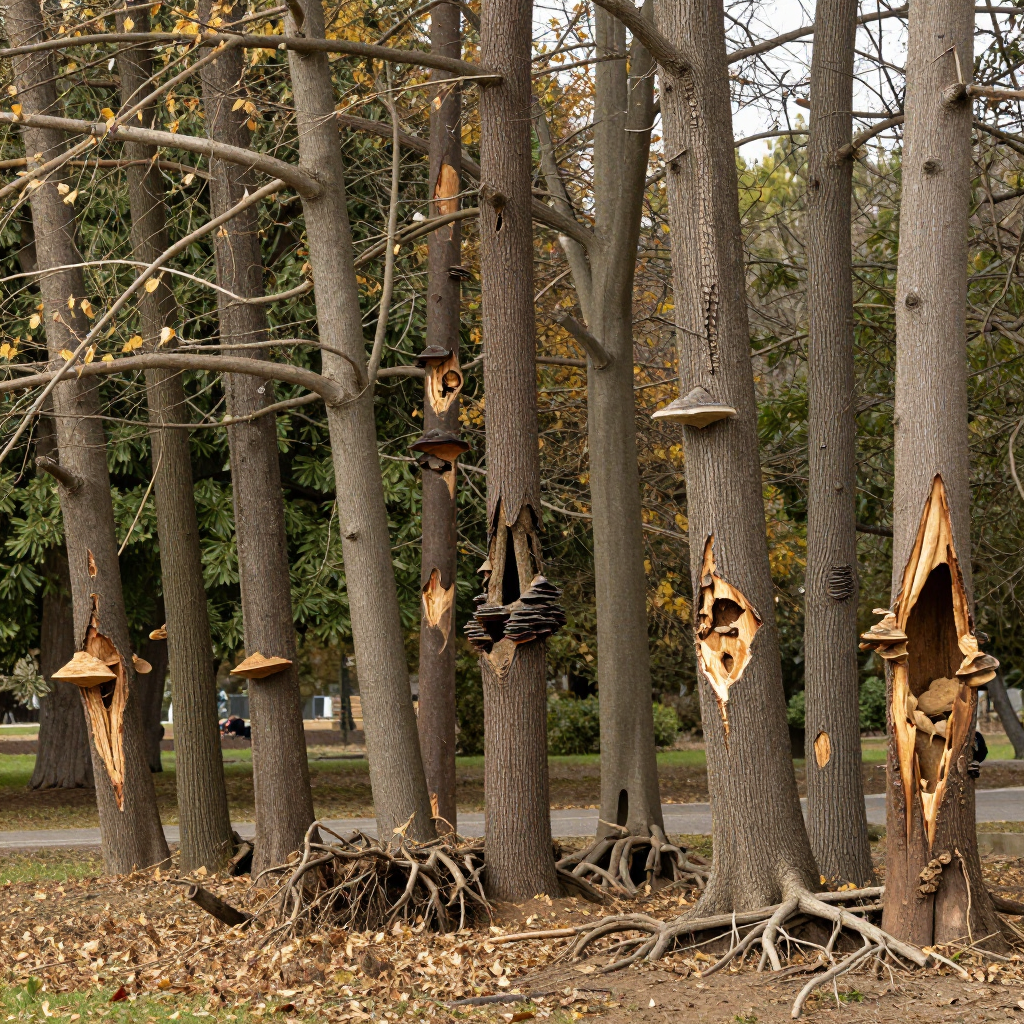
- Mushrooms growing near the base
- Leaning tree
- Sparse foliage
- Slow growth
- Soft or decaying roots
Because root damage often develops underground, it can go unnoticed until the tree becomes hazardous.
How to Tell If a Tree Is Diseased
Many symptoms appear gradually.
Watch for:
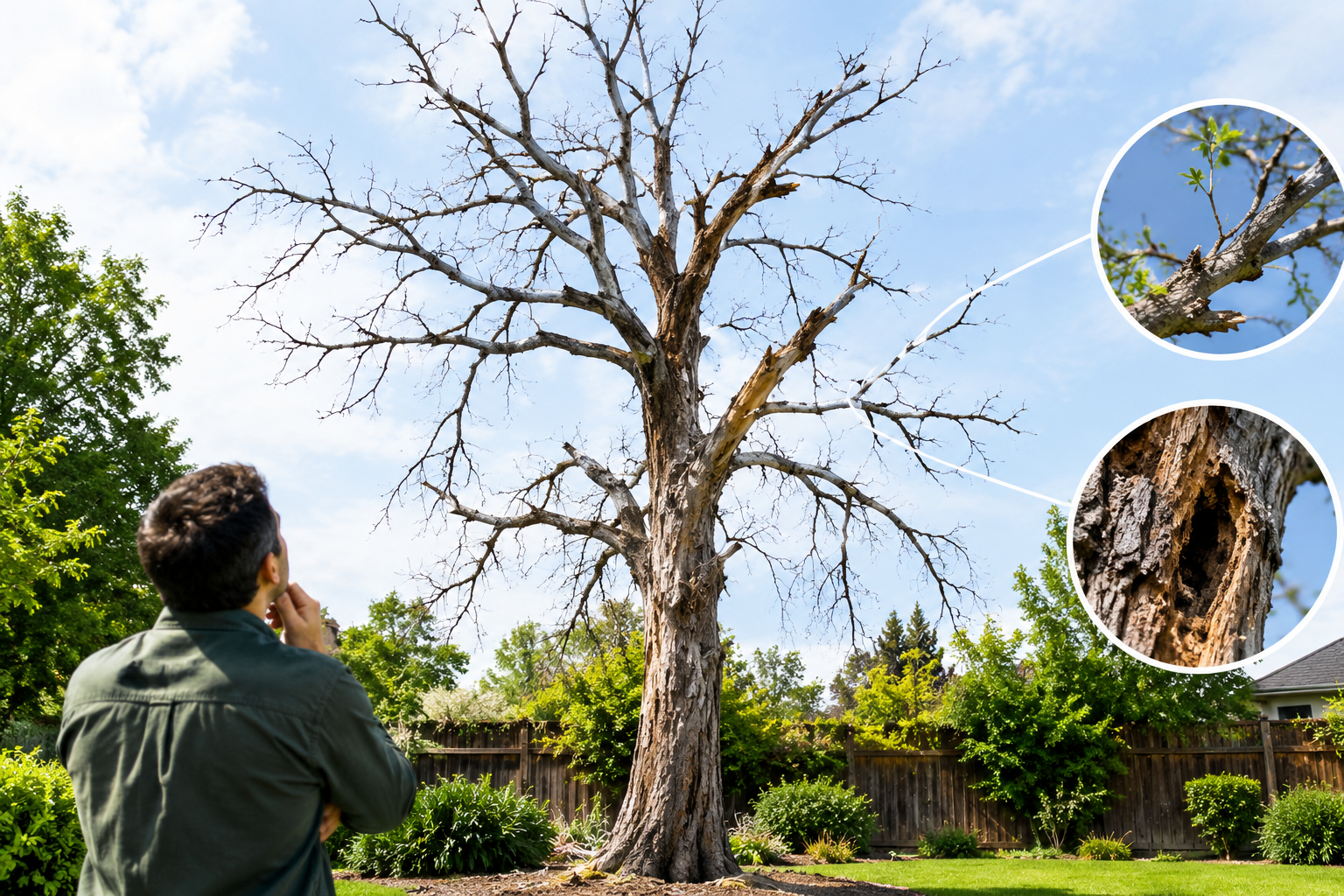
- Dead branches
- Unusual leaf discoloration
- Early leaf drop
- Peeling bark
- Cracks in the trunk
- Mushroom growth
- Sparse canopy
- Slow growth
- Excessive insect activity
If multiple symptoms appear together, schedule a professional inspection before the tree's condition worsens.
Can Diseased Trees Be Saved?
Not every diseased tree needs to be removed.
Depending on the disease and how early it's is discovered, professional tree care may include:
Selective Pruning
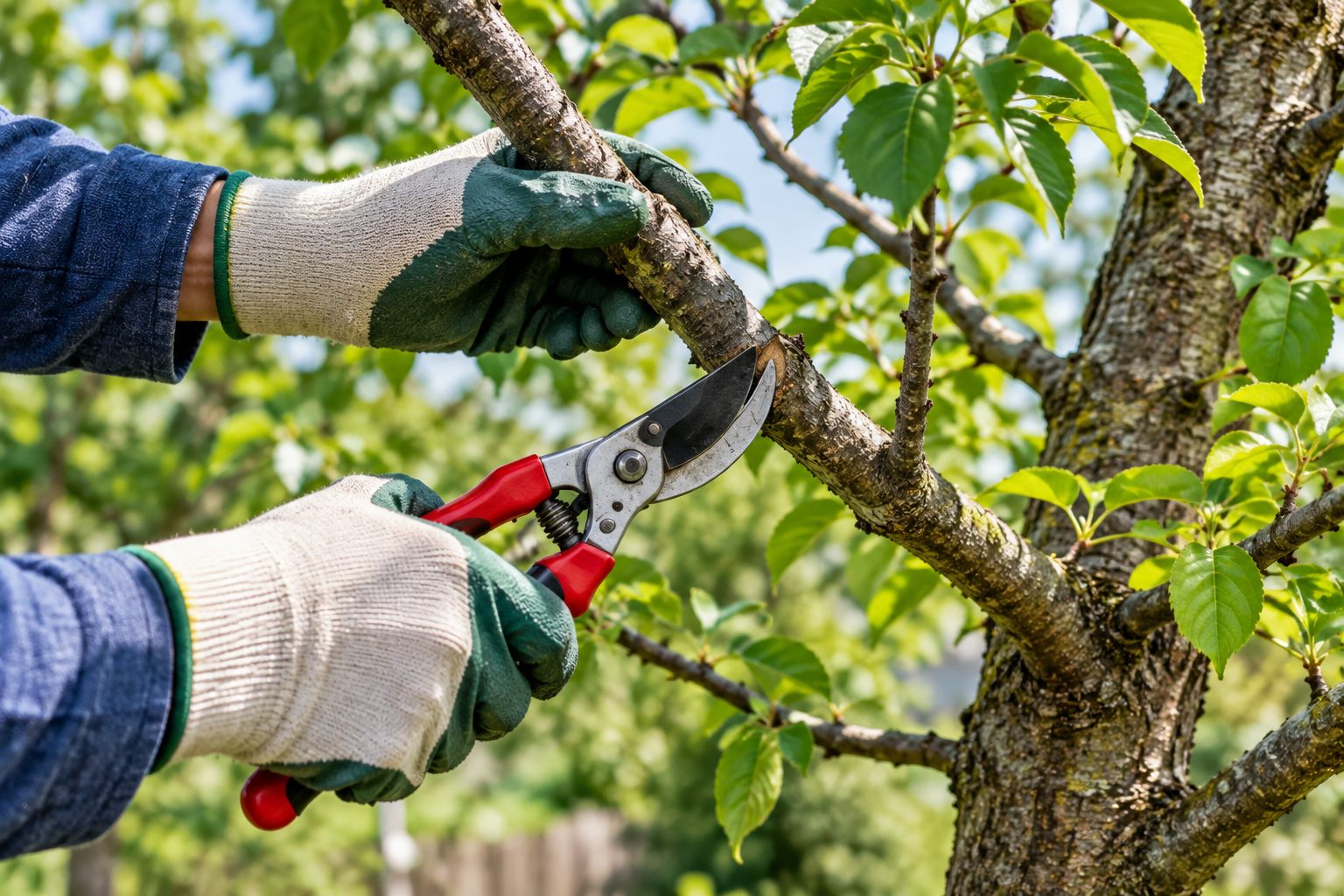
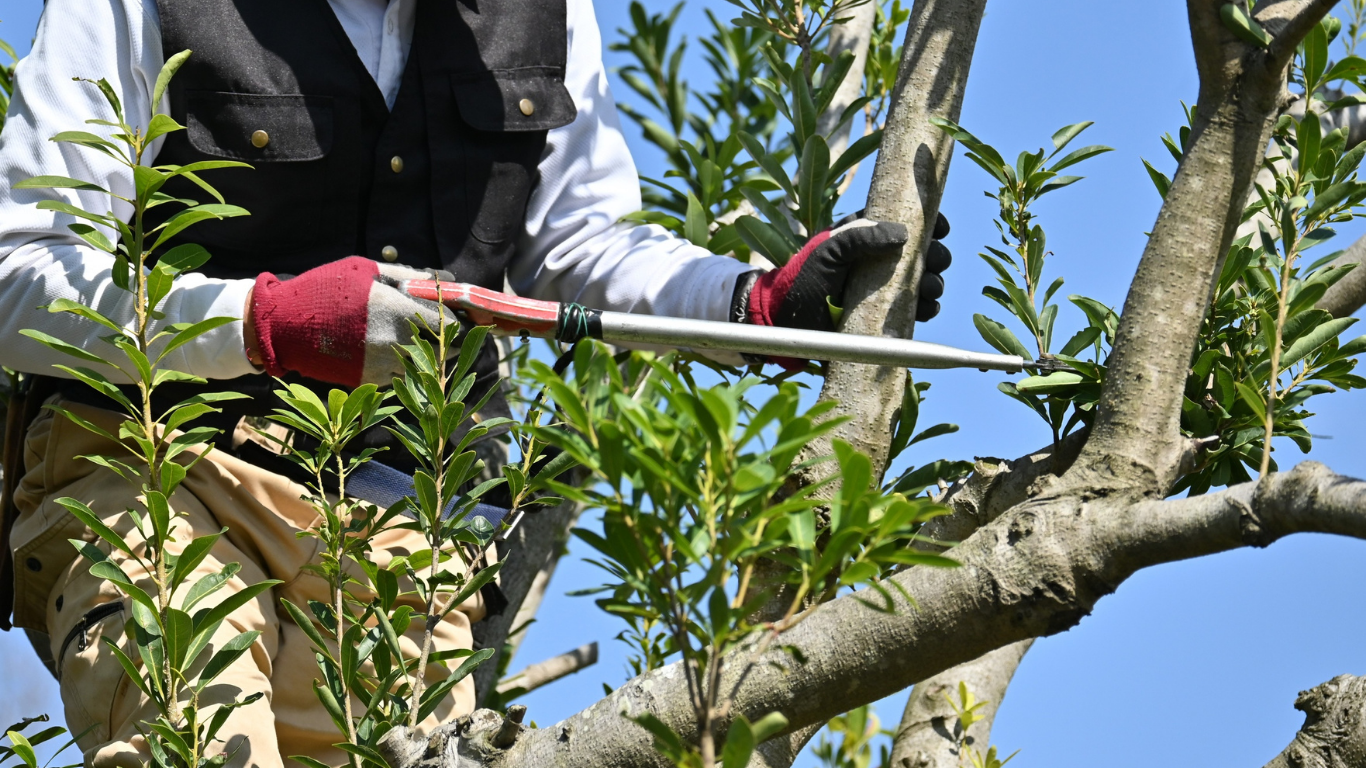
Removing infected limbs helps slow disease progression.
Monitoring
Some diseases remain stable for years with regular inspections.
Improving Tree Health
Healthy trees are often better able to resist disease naturally.
Tree Removal
If disease has severely weakened the tree, removal may be the safest option to protect nearby people and property.
A professional evaluation is the best way to determine the appropriate treatment.
Preventing Tree Diseases
Preventative maintenance is one of the best investments you can make.
Homeowners can reduce disease risks by:
- Scheduling routine inspections
- Removing dead branches
- Watering during drought
- Avoiding root damage during construction
- Applying mulch properly
- Watching for unusual leaf changes
- Addressing insect infestations early
Healthy trees are far more resistant to disease than stressed trees.
Tree Disease and Storm Safety
Diseased trees are more likely to fail during severe weather.
Weak branches and decayed trunks may collapse during:
- Thunderstorms
- High winds
- Heavy snow
- Ice storms
Routine inspections before storm season help identify hazardous trees before they become emergencies.
Why Homeowners Trust Hardwood Tree Service Corporation
Since 1995, Hardwood Tree Service Corporation has helped homeowners and businesses throughout Bergen County and Passaic County identify hazardous trees and recommend the safest course of action.
Whether a tree can be preserved through pruning or requires complete removal, every recommendation is based on safety, tree health, and long-term property protection.
Homeowners choose Hardwood Tree Service Corporation because of its:
- Over 30 years of experience
- Licensed and insured professionals
- Licensed Tree Care Operator (#395)
- Tree Care Industry Association (TCIA) membership
- Owner-operated service
- Professional equipment
- 24/7 emergency availability
Every project is completed with attention to safety, quality workmanship, and customer satisfaction.
Frequently Asked Questions
What is the most common tree disease in New Jersey?
Anthracnose is one of the most frequently seen fungal diseases affecting shade trees in New Jersey, particularly during wet spring weather.
Can tree diseases spread to other trees?
Yes. Some fungal and bacterial diseases can spread through root systems, insects, wind, or contaminated pruning tools.
Can a diseased tree recover?
Many trees can recover if the disease is detected early and treated appropriately. Severe infections, however, may require removal.
Should I remove a tree with fungus growing at the base?
Not always. Fungal growth can indicate internal decay, but a professional inspection is needed to determine the tree's structural condition.
Do you inspect diseased trees?
Yes. Hardwood Tree Service Corporation evaluates tree health and recommends pruning, treatment, or removal based on the tree's condition and safety.
Protect Your Trees Before Disease Spreads
Tree diseases often develop slowly, making early detection essential. Regular inspections and professional maintenance can help preserve healthy trees while identifying hazardous conditions before they become major problems.
If you've noticed unusual leaf loss, dead branches, fungal growth, or declining tree health, Hardwood Tree Service Corporation is here to help. Proudly serving Bergen County and Passaic County, NJ, since 1995, we provide expert tree inspections, pruning, tree removal, stump grinding, lot clearing, commercial tree services, and emergency tree care.
Whether you need a routine tree inspection, disease evaluation, emergency tree removal, or ongoing maintenance, our experienced team provides complete tree care solutions for residential and commercial properties.
Contact us today:
Or call
(201) 390-4953 to schedule your
free estimate and let our experienced team help keep your trees healthy and your property safe.